
25 Open PRs. What's Safe to Merge?
AI made writing code faster. It didn't make deciding what is safe to ship any easier.

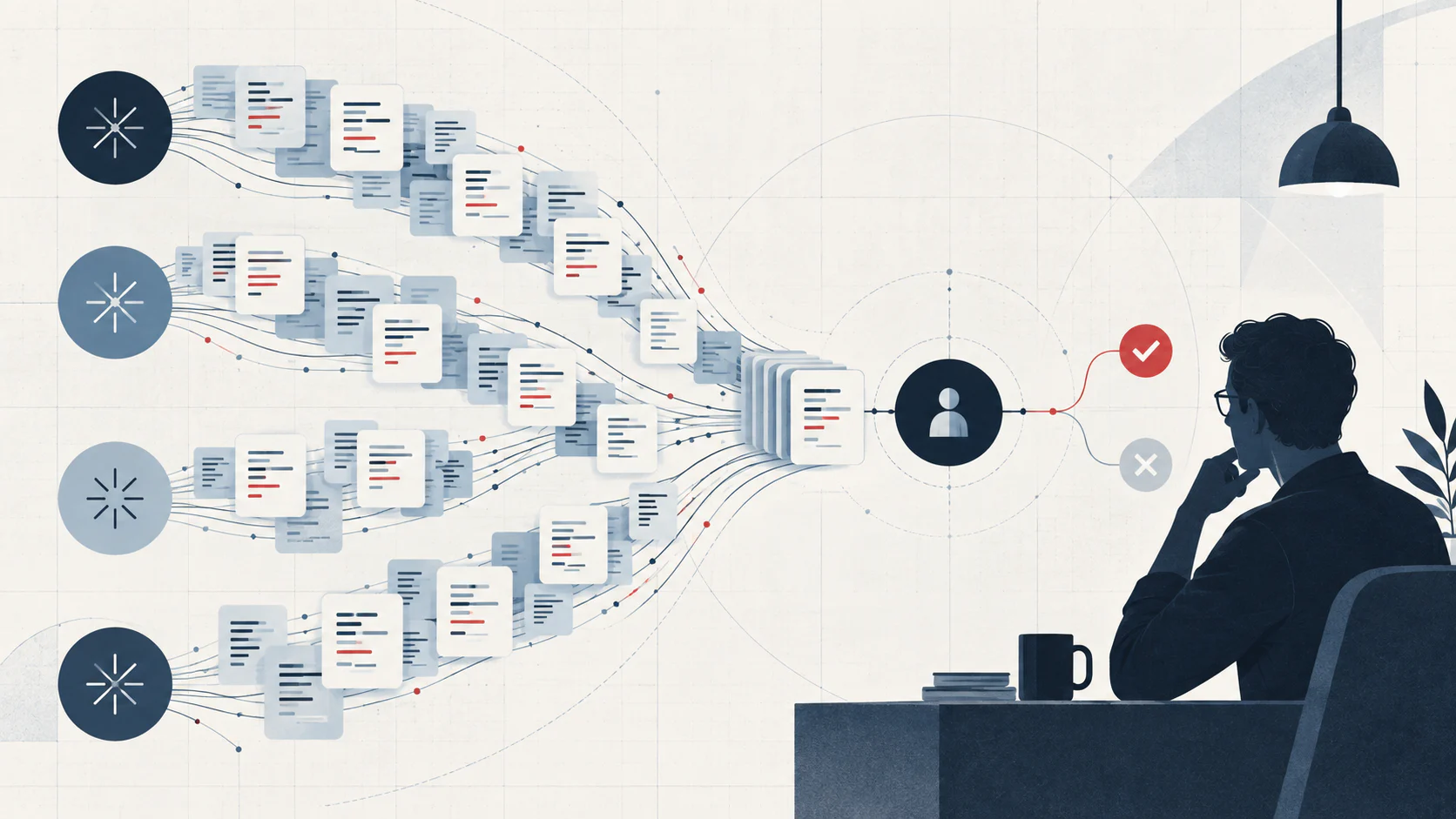
There was a time when writing the code was the slow part of software development.
That is changing quickly.
With AI coding agents, a developer can go from an idea to a working implementation and a pull request in a fraction of the time it used to take.
And when multiple developers and agents work in parallel, the number of pull requests can grow very quickly.
Then you open GitHub.
The PRs are waiting. Most have green checks. Builds pass. Tests pass. The diffs look reasonable.
But someone still has to answer the question that CI cannot fully answer:
“Can we actually trust these changes enough to merge them?”
That is where the bottleneck has moved.
A meaningful review is not just reading changed lines. The reviewer needs to understand what the change was supposed to do, how it affects existing behavior, what other systems depend on it, and what happens when it meets another change already in the release.
One PR might be perfectly safe on its own. Another might also be perfectly safe on its own. Together, they can still create an unexpected interaction.
And the more PRs that arrive, the more context a reviewer has to reconstruct.
- Which changes depend on each other?
- Which approvals are now stale?
- What needs to be re-tested after a merge?
- What is the actual blast radius?
- Which changes need human judgment?
The result is a strange situation: we can produce code faster than we can confidently release it.
The bottleneck didn't disappear. It moved.
The problem isn't that developers are reviewing badly.
The problem is that the old review workflow was designed for a world where changes arrived relatively slowly and independently.
AI has changed that assumption.
We can now create changes in parallel. But verification is still largely organized around individual pull requests and individual reviewers.
Senior engineers become the rate limiter. Context switching increases. Branches drift. Reviews get repeated. And teams end up choosing between moving quickly and understanding what they are actually shipping.
We made code generation parallel. Review was still largely serial.
What if the release was the unit of work?
This is the problem we started exploring at Mindlap.
Instead of treating every pull request as an isolated review, what if we looked at the whole batch of changes that is trying to become a release?
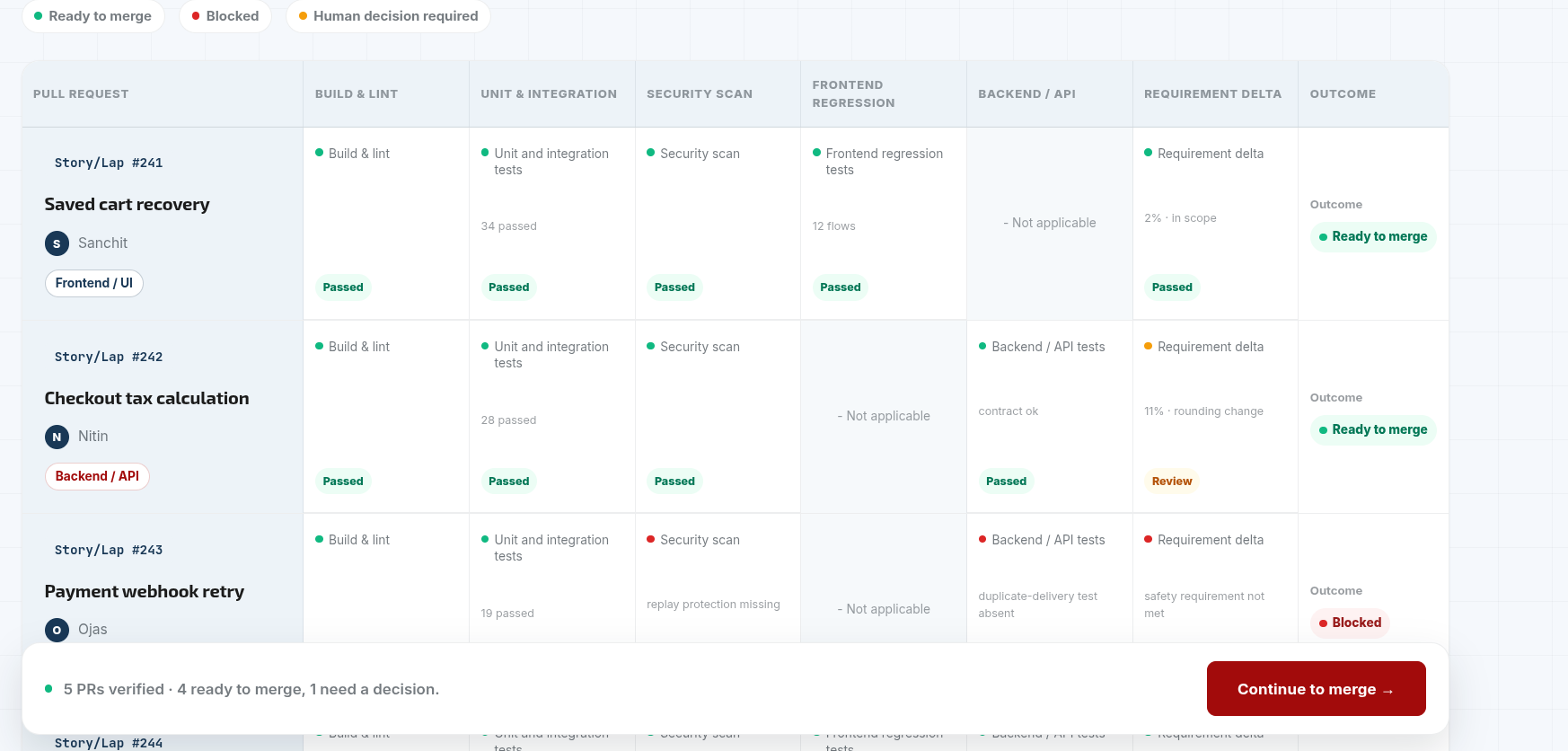
That became the idea behind Release Factory.
It treats the release as the unit of verification: checking changes in parallel, understanding dependencies, re-running affected checks as changes are integrated, and holding uncertain changes for human judgment.
The goal is not to replace the reviewer.
It is to stop making the reviewer manually reconstruct all the evidence needed to make a release decision.
AI can make creating the pull request cheap.
The next challenge is making the path from pull request to trusted release just as fast.